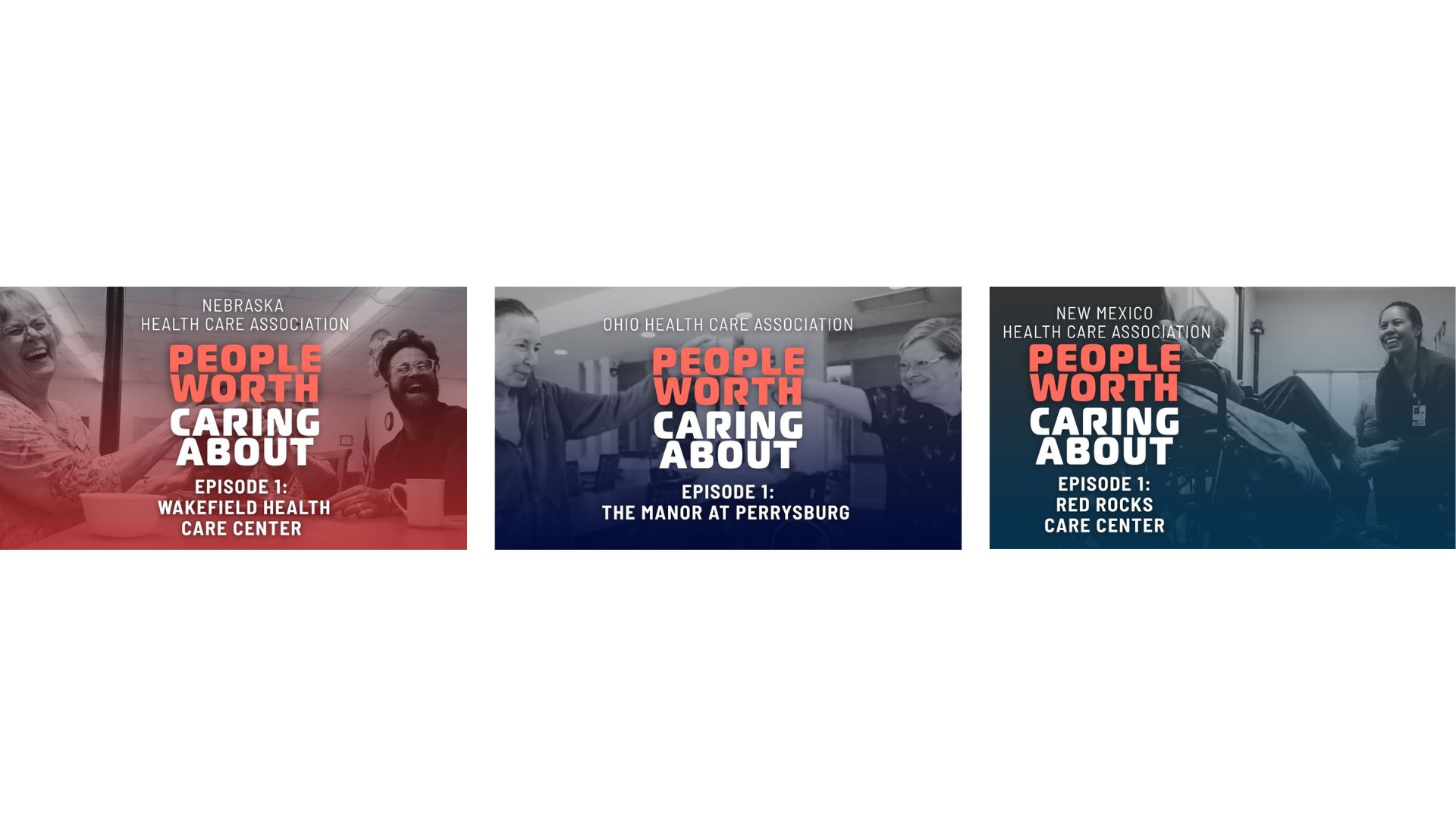
Long-Term Care Has a Storytelling Problem. This Series Is Trying to Fix It
Long-Term Care Has a Storytelling Problem. This Series Is Trying to Fix It
Long-term care is often introduced to the public through moments of crisis. Families hear about nursing homes and assisted living when a loved one can no longer live safely alone. News coverage tends to focus on staffing shortages, rising costs, regulatory failures, or heartbreaking cases where care has fallen short. These are real issues, and they deserve serious attention. But they are not the full story.
What often gets lost is the human reality of long-term care: the caregiver who knows exactly how a resident likes their morning routine, the nurse who notices a subtle change before anyone else does, the activities director who helps someone feel connected again, or the resident whose life story is much bigger than the room they now live in.
That is the gap People Worth Caring About steps into. The documentary series does not ignore the challenges facing long-term care, but it shifts the lens. Instead of treating the sector as a collection of problems, it focuses on the people who give and receive care every day.
Long-term care does not only have a workforce problem, a funding problem, or a reputation problem. It has a storytelling problem. Too often, the people at the center of care are either invisible or reduced to statistics. People Worth Caring About is trying to change that by showing the dignity, purpose, and emotional depth that define care work when people are willing to look closely.
Why Long-Term Care Struggles With Public Perception
Long-term care has always been difficult to talk about because it sits at the intersection of aging, disability, family responsibility, healthcare, and loss of independence. For many families, the first serious conversation about nursing homes or assisted living happens during a stressful transition: after a fall, a hospital stay, a diagnosis, or the realization that a loved one can no longer manage safely at home.
That emotional context shapes how people see the sector. Long-term care is often associated with fear, guilt, and uncertainty before anyone has even walked through the doors of a care community. Families worry about whether they are making the right decision. Residents may worry about losing control over their daily lives. Staff are expected to provide stability in moments that are already deeply personal and emotionally charged.
Public narratives do not always make that complexity easier to understand. The stories that travel furthest are often the most negative: reports about staffing shortages, rising costs, poor-quality care, or facilities that failed the people they were meant to protect. These stories matter, especially when they expose real harm or systemic problems. But when they become the dominant way people understand long-term care, they leave little room for the everyday acts of patience, skill, and compassion that also define the field.
As a result, caregivers are often seen through the lens of labor shortages rather than human commitment. Residents are described as vulnerable populations rather than individuals with full lives, memories, preferences, humor, and relationships. Facilities are judged by compliance language and star ratings, but not always by the quieter human bonds that shape daily life inside them.
This is why long-term care’s reputation challenge cannot be solved through marketing alone. The sector does not simply need better messaging. It needs fuller, more honest storytelling that can hold both truths at once: the challenges are real, and so is the care.
The Missing Human Story in LTC
What often gets missed in conversations about long-term care is that care is not only a service. It is a relationship. Behind every clinical task, meal service, activity, therapy session, or medication round is a human exchange that shapes how residents experience their day.
That is difficult to communicate through the usual language of the industry. Long-term care is often described in terms of beds, staffing ratios, reimbursement, compliance, occupancy, and quality measures. Those details matter. They help determine whether care communities are safe, sustainable, and accountable. But they rarely capture what it feels like to live or work inside one.
The real texture of long-term care is found in smaller moments: a caregiver remembering a resident’s favorite song, a staff member noticing when someone seems quieter than usual, a nurse taking extra time to explain something to a worried family, or an activities team helping residents feel part of a community rather than isolated from the world outside.
These moments are not always dramatic enough to become headlines. They are not always easy to measure. But they are often what families remember, what residents depend on, and what gives care workers a sense of purpose.
That is why the missing story in LTC is not simply a positive story. It is a fuller story. Long-term care needs narratives that show the emotional intelligence, patience, humor, skill, and consistency required to care for people over time. Without that human layer, the sector is reduced to its challenges. With it, audiences can begin to see long-term care as a place where dignity is protected through ordinary acts of attention.
What People Worth Caring About Adds to the Conversation
This is where People Worth Caring About becomes more than a documentary series about long-term care. It becomes an example of what the industry has often struggled to do: make people feel the human value of care, not just understand the operational need for it.
The series shifts attention away from abstract debates and toward the people who live the reality of long-term care every day. Caregivers are not presented only as workers filling shifts. They are shown as people who bring patience, skill, humor, memory, and emotional presence into their roles. Residents are not treated only as patients or recipients of services. They are shown as individuals with personalities, relationships, histories, and preferences.
That matters because long-term care is often judged from the outside. Families, policymakers, and the public may see the sector through reports, ratings, headlines, or moments of personal crisis. People Worth Caring About invites them to look closer. It shows that care communities are not defined only by buildings, beds, or compliance systems, but by the relationships that form inside them.
The strength of this approach is that it does not need to deny the sector’s challenges. Long-term care still faces serious pressures, including staffing shortages, burnout, funding constraints, and public mistrust. But by focusing on real people and real stories, the series creates room for a more balanced conversation.
It reminds audiences that the future of long-term care will not be shaped by policy and workforce strategy alone. It will also depend on whether society can recognize the dignity of the people receiving care and the value of the people providing it. In that sense, People Worth Caring About is not simply telling stories about LTC. It is helping the sector reclaim its own narrative.
Why Storytelling Matters for the LTC Workforce
The workforce challenge in long-term care is usually discussed in practical terms: staffing levels, recruitment pipelines, wages, training, turnover, and burnout. Those issues are urgent, and no amount of storytelling can replace the need for better support, fair compensation, and sustainable working conditions. But storytelling still matters because people do not choose care work only because a position is available. They choose it because they can see meaning in it.
That meaning is not always visible from the outside. To someone unfamiliar with long-term care, the work may seem physically demanding, emotionally heavy, or undervalued. But for many caregivers, the role also offers a rare kind of purpose: the chance to become part of someone’s daily life, to provide comfort during vulnerable moments, and to build trust over time.
When those stories are not told, the profession is easier to misunderstand. Care workers become part of a staffing shortage rather than individuals doing skilled, relational work. Their contributions are measured by whether shifts are covered, but not always by the emotional stability, familiarity, and dignity they help create for residents.
This is where a series like People Worth Caring About can be especially powerful. By showing the people behind the job titles, it helps restore pride in care work. It gives current workers a sense that their efforts are seen, and it gives potential workers a clearer picture of what the profession can mean beyond the task list.
Long-term care recruitment cannot rely on job descriptions alone. The sector also needs stories that help people imagine themselves in the work and understand why it matters. People do not commit to care work because of a staffing chart. They commit because they see purpose, belonging, and impact.
Why Families Need Better LTC Stories Too
Better storytelling is not only important for the workforce. It also matters for families, who often approach long-term care with fear, guilt, and uncertainty. For many people, choosing a nursing home or assisted living community is one of the most emotionally difficult decisions they will make for someone they love.
In those moments, families need more than facility descriptions, service lists, or polished brochures. They need to understand what care actually looks like in daily life. They need to see the people behind the system: the aides who learn a resident’s routines, the nurses who communicate with families, the therapists who help someone regain confidence, and the staff members who make a community feel less unfamiliar.
That is why human-centered storytelling can build a different kind of trust. It helps families imagine care not as abandonment or loss, but as support delivered through real relationships. It does not remove the difficulty of the decision, but it can make long-term care feel less distant, less clinical, and less transactional.
A series like People Worth Caring About gives families something the industry often struggles to provide: a more honest emotional picture of what happens inside care communities. It shows that long-term care is not only about where someone lives. It is also about who shows up for them every day.
The Bigger Lesson for LTC Leaders
The larger lesson for long-term care leaders is not that every provider needs to produce a documentary series. It is that the sector needs to become much better at showing what care actually means.
Too often, LTC communication focuses on services, amenities, compliance, and operational strength. These details are important, but they are rarely enough to change how people feel about long-term care. Families, workers, and communities need to see the human evidence behind those claims. They need stories that make trust visible.
That means leading with people, not only programs. It means showing the daily moments that reveal dignity: a resident being listened to, a caregiver taking time to understand someone’s preferences, a team celebrating a small recovery, or a family feeling reassured because staff know their loved one well.
For providers and associations, storytelling should not be treated as a soft marketing extra. It can support recruitment, retention, family engagement, advocacy, and public trust. When done well, it helps the sector explain itself in a language people can feel, not just evaluate.
People Worth Caring About offers a useful reminder: the strongest story in long-term care is not the building, the service line, or the policy message. It is the relationship between the people giving care and the people receiving it.
LTC Needs to Be Seen Differently
Long-term care will always involve difficult realities. It exists because people need support through aging, illness, disability, memory loss, or major changes in independence. Those realities should not be softened or ignored. But they should not be the only story people hear.
When long-term care is viewed only through crisis, cost, and risk, the people at the center of it disappear. Caregivers become staffing numbers. Residents become case profiles. Families become decision-makers under pressure. What gets lost is the relationship-based work that gives long-term care its real meaning.
That is why People Worth Caring About matters. It helps audiences see what is too often overlooked: the dignity of residents, the dedication of caregivers, and the everyday human connections that make care possible.
To change how people value long-term care, the industry first has to change what people are able to see.
